Ginotek Shock Absorption and Noise Reduction Case & Project
Using technology to achieve a quiet, safe, and comfortable life
Rubber Project Case: Technology changes the way that problems are solved
Innovative Solution: Scenario based Formula Customization
- Precise environmental adaptation
For the special vibration spectrum of small tonnage engines (mainly low and medium frequency vibrations), by adjusting the ratio of rubber substrate and filler: increasing the proportion of high damping rubber, improving the absorption rate of mid to low frequency vibrations, and using high elasticity natural rubber to absorb instantaneous impacts, the problem of shock absorption failure or poor effect caused by mismatched hardness/damping coefficients in ready-made products can be solved.
- Technical advantages
Multi performance collaborative balance: For specific application points, the proportion of each component in the formula is precisely controlled to achieve the best balance of various properties such as high and low temperature resistance, oil resistance, aging resistance, high elasticity, high adhesive strength, excellent shock absorption and noise reduction. For example, in response to the high vibration characteristics of high-speed elevator hosts, emphasis is placed on strengthening their dynamic mechanical performance and damping characteristics; Focusing on improving the heat and oxygen aging resistance of traction machines in high-temperature areas.
Anti fatigue and dynamic performance stability: Under long-term alternating stress and vibration, it has higher anti fatigue strength and dynamic elastic modulus stability, can continuously and effectively absorb and attenuate vibration energy, and avoid functional loss caused by fatigue failure.
Efficient vibration energy absorption: Customized formula design can accurately regulate the damping coefficient and elastic modulus of the rubber material, enabling it to have the best vibration reduction effect within a specific vibration frequency range of the host, effectively reducing vibration transmission and noise sources.
- Design optimization
Rubber parameter matching: Based on the selection data, deduce the key performance parameters of the required rubber material (such as hardness, elastic modulus, Poisson’s ratio, loss factor, etc.), guide the precise development of the rubber material formula, optimize the interface design between the rubber material and the bonded substrate (such as surface roughness, chamfer, etc.), match the rubber material performance, and improve the overall bonding strength and durability.
Long life design: By selecting materials that are resistant to aging and fatigue, and optimizing the structure, the replacement cycle of the main engine rubber is maximized, reducing maintenance costs and downtime losses.
Easy to install and easy to replace design: Considering the convenience of installing the main rubber components and the operability of future replacement without affecting performance, reducing labor costs.
Reliability prediction and verification: Establish a reliability model for the host adhesive, verify its lifespan through accelerated aging tests, fatigue tests, and other methods, and design iterations based on the verification results.
Standardization: Promoting the standardization of key performance indicators and testing methods for host adhesives, as well as the standardization of commonly used specifications and adhesive types, is beneficial for quality control, cost reduction, and interchangeability.
Modularization: Design modular host adhesive solutions for different series or models of elevator hosts, meet specific needs by combining different standard modules, and improve design efficiency and product versatility.
This plan achieves the optimal performance of shock absorption and cost-effectiveness through triple breakthroughs in material formulation, structural design, and process innovation. If specific testing data or customized development process manuals are required, in-depth technical solutions can be provided based on customer equipment parameters.
Innovative Solution: Scenario-Based Formula Customization
- Precision Environmental Adaptation
Designed for small-tonnage machinery with specific vibration spectra (dominated by low-to-medium frequencies), this solution optimizes the ratio of rubber base materials to fillers:
- Increased High-Damping Rubber Content: Enhances absorption of low-frequency vibrations.
- High-Elasticity Natural Rubber: Effectively absorbs instantaneous impacts.
- Eliminates Mismatch Issues: Addresses shortcomings of off-the-shelf products, such as inadequate shock absorption due to improper hardness or damping coefficient alignment.
- Technical Advantages
Multi-Performance Synergy
Precisely tailored for specific applications, the formula balances multiple properties:
- Environmental Resistance: High/low-temperature tolerance, oil resistance, and aging resistance.
- Mechanical Performance: High elasticity, superior adhesive strength, and exceptional vibration damping/noise reduction.
Application-Specific Optimization:
High-Speed Elevators
- Traction Motors: Focus on heat and oxidative aging resistance.
- Fatigue Resistance & Dynamic Stability
– Maintains high fatigue strength and stable dynamic elastic modulus under prolonged cyclic stress and vibration.
– Ensures continuous vibration energy absorption and attenuation, preventing fatigue-induced failure.
- Efficient Vibration Energy Absorption
– Customized formula design allows precise control of damping coefficient and elastic modulus, maximizing vibration reduction within specific frequency ranges. Effectively minimizes vibration transmission and noise sources.
- Design Optimization-Material Parameter Matching
Performance-Driven Development: Derives key material parameters (hardness, elastic modulus, Poisson’s ratio, loss factor) from selection data.
Interface Optimization: Enhances adhesive strength and durability through surface roughness and corner design.
Longevity Design:Extends service life by using aging-resistant and fatigue-resistant materials, reducing maintenance costs and downtime.
Ease of Installation & Replacement:Prioritizes installation convenience and future replaceability without compromising performance, lowering labor costs.
Reliability Prediction & Validation
Model-Based Testing: Develops reliability models validated through accelerated aging and fatigue tests.
Iterative Design: Refines solutions based on test results.
Conclusion:Through breakthroughs in material formulation, structural design, and process innovation, this solution achieves optimal balance between shock absorption performance and cost-effectiveness. For detailed test data or customized development guidelines, we provide tailored technical solutions based on client equipment specifications.
Product Development Case Study: Customized Industrial Rubber Project Solution for Enhanced Cost Efficiency & Performance
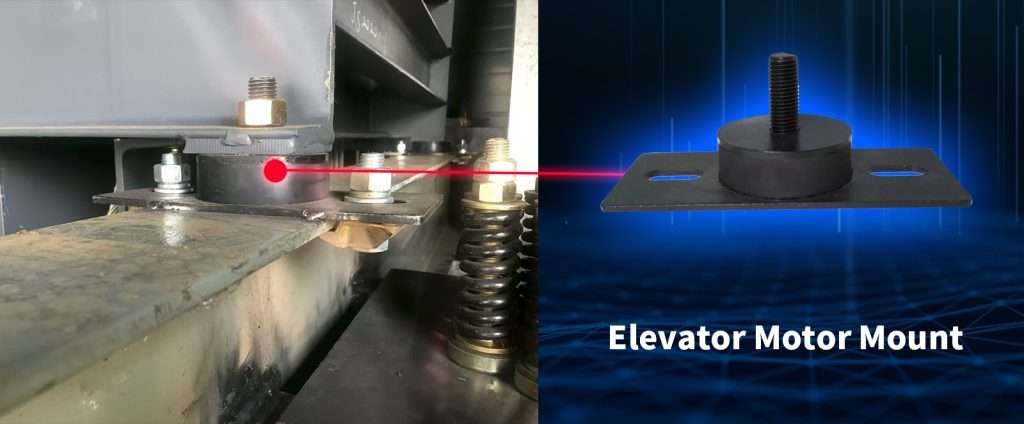
Background
Background: In response to the customer’s ideal request for a rubber pad solution that balances usage costs with stable shock absorption and noise reduction performance, our engineering team conducted a comprehensive analysis of the operating environment. Standard ready-made rubber pads were found to be unable to fully match specific usage scenarios, leading to substandard shock absorption performance and high usage costs. To address this issue, we promptly adjusted the formula of the shock absorber rubber and developed a new type of main engine shock absorber rubber suitable for small tonnage applications. This main engine rubber not only enhances the shock absorption effect but also significantly reduces customers’ procurement costs.