

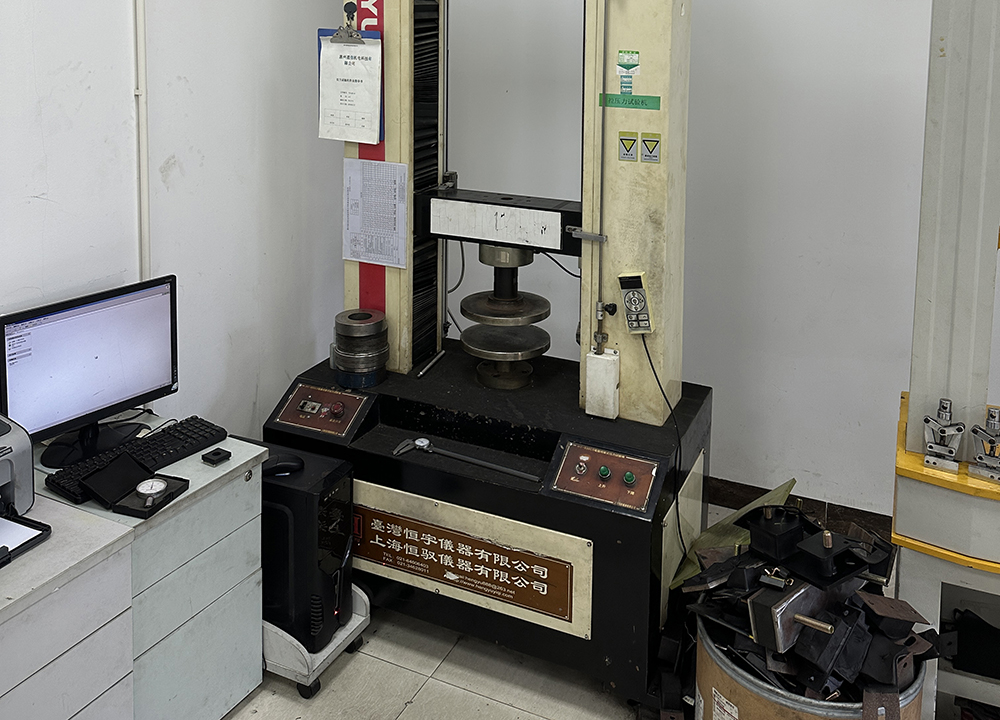
Monitoring Industrial Rubber Quality: Essential Testing Indicators
Industrial rubber plays a pivotal role across sectors like automotive, aerospace, and manufacturing, where its performance directly impacts equipment reliability and safety. To ensure consistent quality, rigorous testing of key metrics is mandatory. Below are the critical indicators that must be monitored:
1. Hardness Testing
Standard: ASTM D2240 (Shore A/D scales)
Purpose: Measures resistance to indentation, ensuring material meets load-bearing requirements.
Network Keywords: durometer hardness, Shore scale, ASTM compliance
2. Tensile Strength & Elongation
Standard: GB/T 528-2009 / ASTM D412
Purpose: Evaluates durability under stretching forces; critical for seals and vibration dampers.
Industry Term: stress-strain curve, elongation at break
3. Compression Set & Fatigue Resistance
Standard: GB/T 7759 (Compression Set), GB/T 1682 (Low-Temperature Brittleness)
Purpose: Assesses permanent deformation under compression and cyclic loads, vital for gaskets and O-rings.
Trending Topic: dynamic stiffness, fatigue life
4. Ozone & Thermal Aging Resistance
Standard: GB/T 7762 (Ozone), GB/T 3512 (Thermal Aging)
Purpose: Determines material stability in harsh environments (e.g., outdoor or high-temperature applications).
SEO Focus: accelerated aging test, UV resistance
5. Tear Strength & Abrasion Resistance
Standard: GB/T 529 (Tear), GB/T 9867 (Abrasion)
Purpose: Ensures longevity against mechanical wear in belts and tires.
Key Term: tear propagation, rotary drum abrasion
6. Chemical Resistance & Environmental Compatibility
Scope: Oil, acid/alkali, and solvent exposure per HG/T 3099
Purpose: Validates suitability for chemical processing or automotive fluids.
Industry Buzz: swelling index, media compatibility
7. Environmental & Safety Compliance
Standards: REACH, RoHS (heavy metals, PAHs)
Purpose: Meets regulatory mandates for eco-friendly and non-toxic production.
Network Trend: green rubber, sustainable manufacturing