

1. Material Composition Analysis
Virgin Rubber (NR/SBR/EPDM): Contains >90% pure rubber hydrocarbon (e.g., natural rubber’s cis-1,4-polyisoprene), with consistent molecular structure and cross-linking density.
Reclaimed Rubber: Includes residual vulcanization agents (e.g., sulfur, accelerators), fillers (e.g., carbon black), and recycled rubber fragments, leading to lower rubber hydrocarbon content (typically 75–85%).
2. Physical and Mechanical Testing
Property Virgin Rubber Reclaimed Rubber
Tensile Strength 25–35 MPa 15–25 MPa
Elongation 500–1000% 300–600%
Hardness (Shore A) 50–70 (EPDM) 60–80
Tear Resistance High Moderate
Key Insight: Virgin rubber exhibits superior dynamic fatigue resistance and thermal stability, while reclaimed rubber often shows higher compression set .
3. Chemical and Thermal Behavior
Solvent Swelling Test:
Virgin rubber swells predictably in solvents (e.g., toluene).
Reclaimed rubber may show irregular swelling due to residual cross-links.
Thermogravimetric Analysis (TGA):
Virgin rubber decomposes sharply at ~400°C.
Reclaimed rubber displays multiple degradation peaks from additives.
4. Application-Specific Indicators
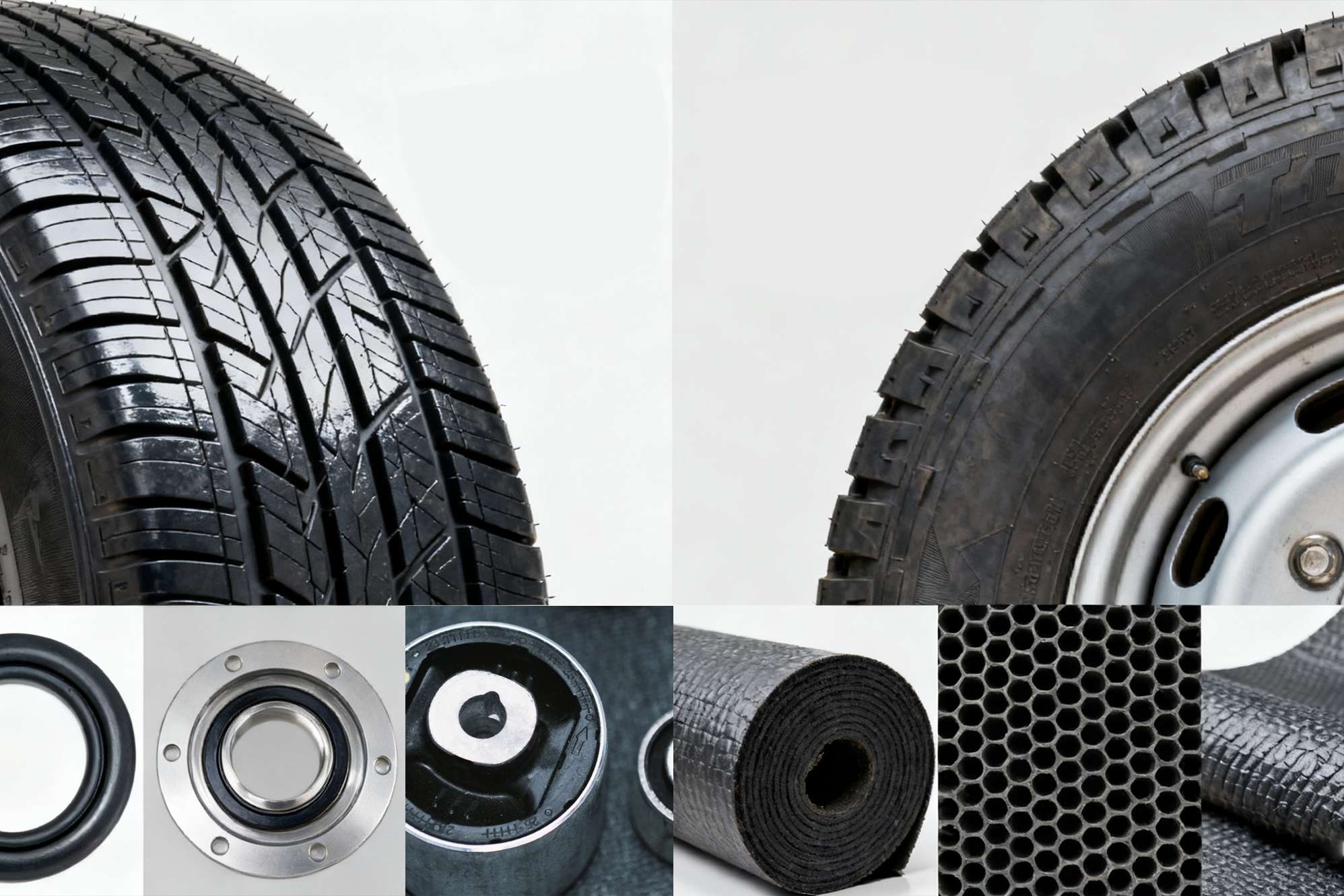
Tire Tread: Virgin rubber ensures wet grip and abrasion resistance ; reclaimed rubber may reduce lifespan by 30–50%.
Seals/Gaskets: Virgin rubber maintains (air tightness); reclaimed rubber risks leakage due to micro-cracks.
Cost Efficiency: Reclaimed rubber cuts costs by 40–60% but requires higher fillers to compensate for strength loss.
5. Industry Standards & Certifications
ASTM D2000: Classifies virgin rubber by (oil resistance) and (heat aging).
ISO 4665: Ozone aging tests expose reclaimed rubber’s faster crack growth.
Green Certifications: Look for EPD (Environmental Product Declaration) to verify reclaimed rubber’s sustainability claims.